
The Swanson TV Dinner: The Meal Born From 260 Tons of Leftover Turkey
In the autumn of 1953, Swanson found itself with 260 tons of frozen turkey and no obvious solution. What came out of that surplus wasn't just a product, it was a new American ritual, a new room to eat in, and a quietly radical shift in how families spent their evenings.

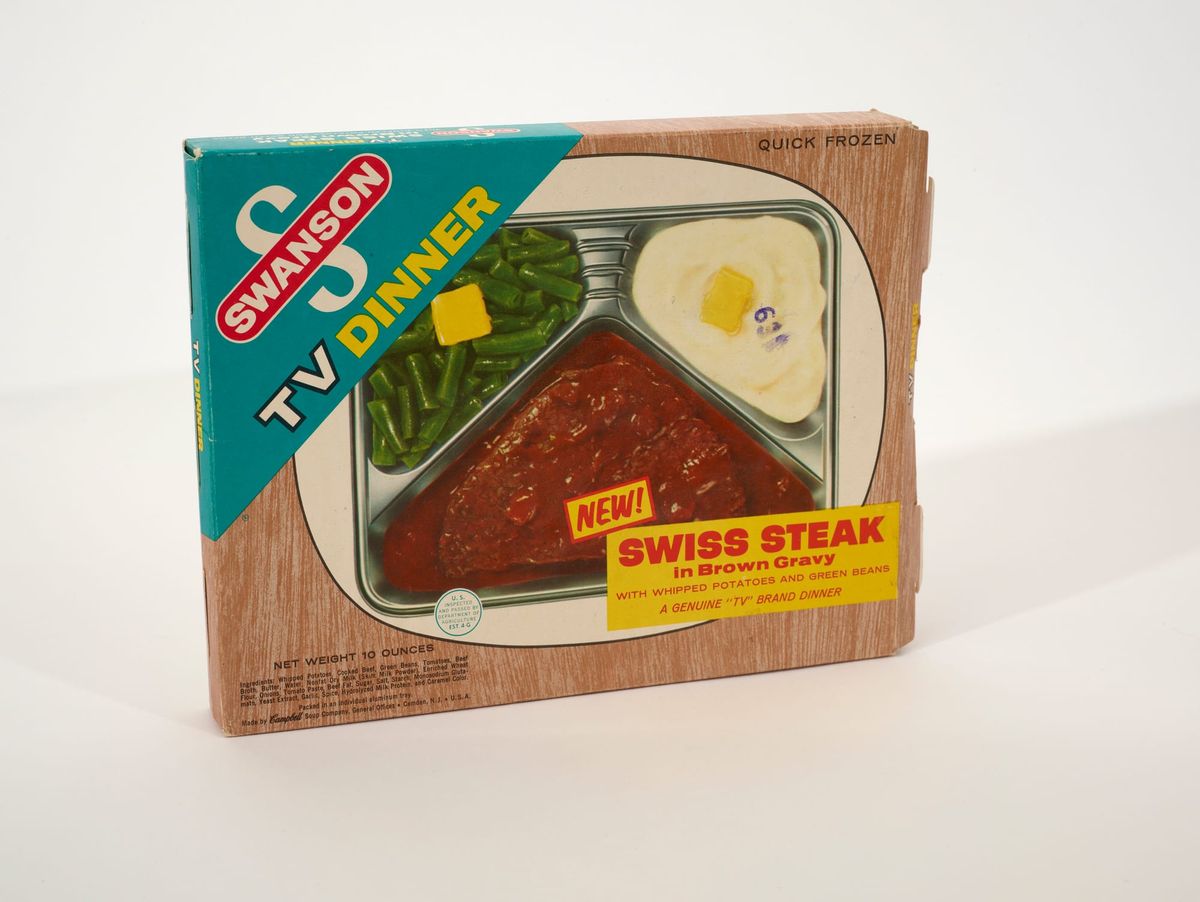
In the autumn of 1953, C. A. Swanson & Sons found itself with a problem no cookbook could solve. The company had badly overestimated Thanksgiving demand and was now sitting on roughly 260 tons of frozen turkey. They were packed into refrigerated railroad cars, and circling the country to stay cold, while someone figured out what to do with them. What came out of that logistical headache wasn't just a product. It was a new way of eating.
A Tray for the Television Age
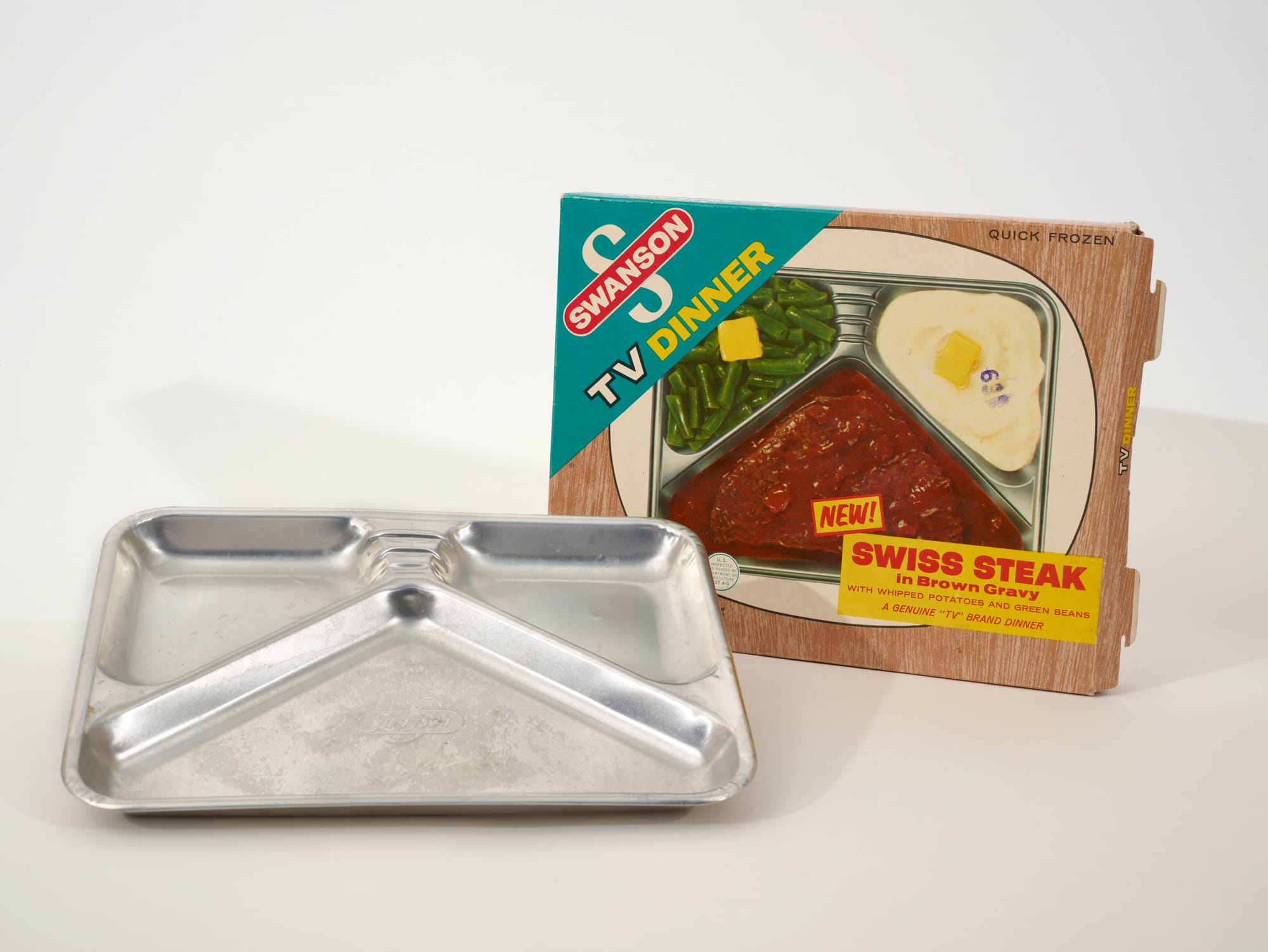
The "TV Brand Frozen Dinner" launched nationally in 1954. Each package contained a 10–12 ounce meal on a three-compartment aluminum tray: turkey, cornbread stuffing with gravy, peas, and sweet potatoes. It sold for around 98 cents, heated in a conventional oven in roughly 25 minutes, and was designed to be eaten while watching prime-time television. The package itself pictured a TV set in the corner, the product and its intended setting were one and the same.
The "TV dinner" name was trademarked deliberately. Swanson wasn't just selling frozen food; it was selling a domestic ritual organized around the living room rather than the dining table. In 1953, television had crossed the threshold into more than half of American households. The set had become the new hearth, and Swanson simply set the table around it.
What the Ads Promised
The early campaigns from 1954 through the mid-1950s understood that convenience alone wouldn't sell the product. What they sold instead was permission. Print ads showed well-dressed mothers in pearls sliding aluminum trays onto TV tables, with slogans that ran along the lines of "I'm late, but dinner won't be". It was promising that a hot, complete dinner could still appear on schedule even when time had run out. The subtext was clear, this wasn't a shortcut for the indifferent cook, it was a solution for a conscientious woman running short on time.
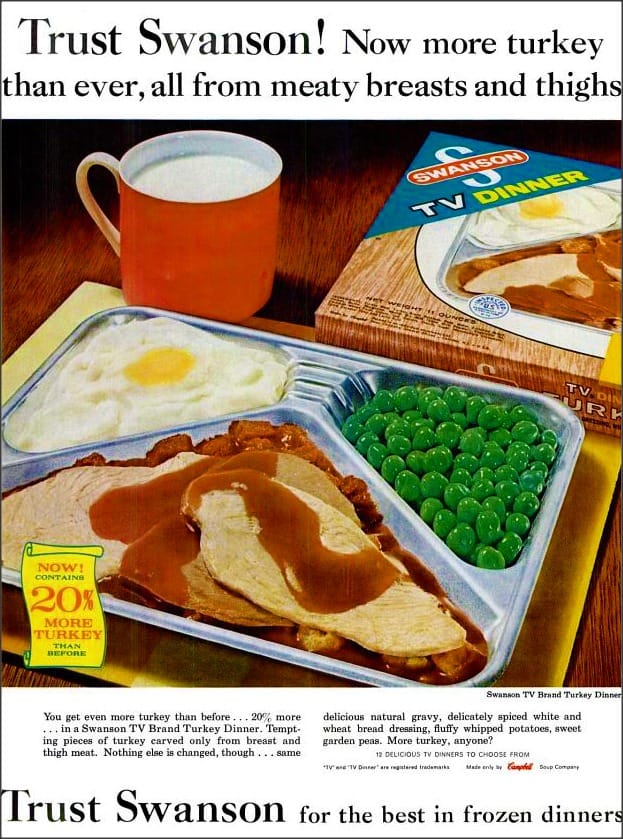
One recurring theme was togetherness. Ad layouts placed the whole family in a loose semicircle facing the television set, each holding a tray, the suggestion being that Swanson let Mom "be in on the TV fun" rather than stuck in the kitchen while the rest of the household settled in for the evening. The product was framed as a technology of inclusion, not a retreat from homemaking but a modern upgrade to it.
The meal itself was presented with something close to institutional precision. The separated compartments carried an implicit promise - the same turkey and gravy, the same potatoes, every time. No guesswork, no variation. At a moment when jet travel, automatic washers, and electric ranges were reshaping domestic life as modern and push-button, the TV dinner arrived as a meal you operated rather than cooked.
Laura Shapiro's Something from the Oven is the best single account of how convenience food reshaped American domestic life in this period, and how hard the food industry worked to make it feel natural.
The Problem It Was Really Solving
The social history underneath the advertising is more complicated than the ads admitted. The early 1950s were a period of real tension in American domestic life: more white middle-class women were entering paid work or considering it. The standard of "good homemaking", the hot dinner, the set table, the prepared household, had not adjusted to account for the shorter day. The TV dinner arrived as a kind of silent bargain. It made the hot dinner achievable without the time the hot dinner used to require.
At the same time, the product was quietly reshaping the meal itself. Families eating from individual aluminum trays in the living room were not eating together in the way the ads depicted; they were eating adjacently, each at their own tray, watching the same screen. The TV dinner both responded to changing family patterns and nudged them further along, normalizing fragmented mealtimes while the packaging still showed the nuclear family intact.
Ten Million in the First Year
Swanson's own projections were modest. The company reportedly expected to sell around 5,000 dinners. They sold approximately 10 million in the first full year of production. Within two years, that number had climbed to 25 million. Competitors followed quickly, and by the late 1950s the freezer aisle had become a library of frozen tray meals - fried chicken, pork, Swiss steak, and eventually, a fourth compartment added to the Swanson tray to hold a brownie or fruit cobbler.
Some pushback eventually came. Home economists and food critics raised concerns about the fat and sodium levels typical of frozen meals, and by the 1970s, TV dinners had become cultural shorthand for everything critics blamed on processed food. The industry's response was to pivot: "lean" dinners, "balanced" meals, "international" varieties. The format stayed, but the framing shifted.
What Became of the Tray
Swanson officially retired the "TV dinner" name from its packaging in 1982, replacing it with lines like Hungry-Man. The company's frozen-dinner operations now belong to Conagra Brands, while the Swanson name on broth went to Campbell Soup Company. In parts of Canada, Swanson-branded frozen turkey dinners are still sold, a direct line back to 1954 still visible in the freezer aisle if you know what you're looking at.
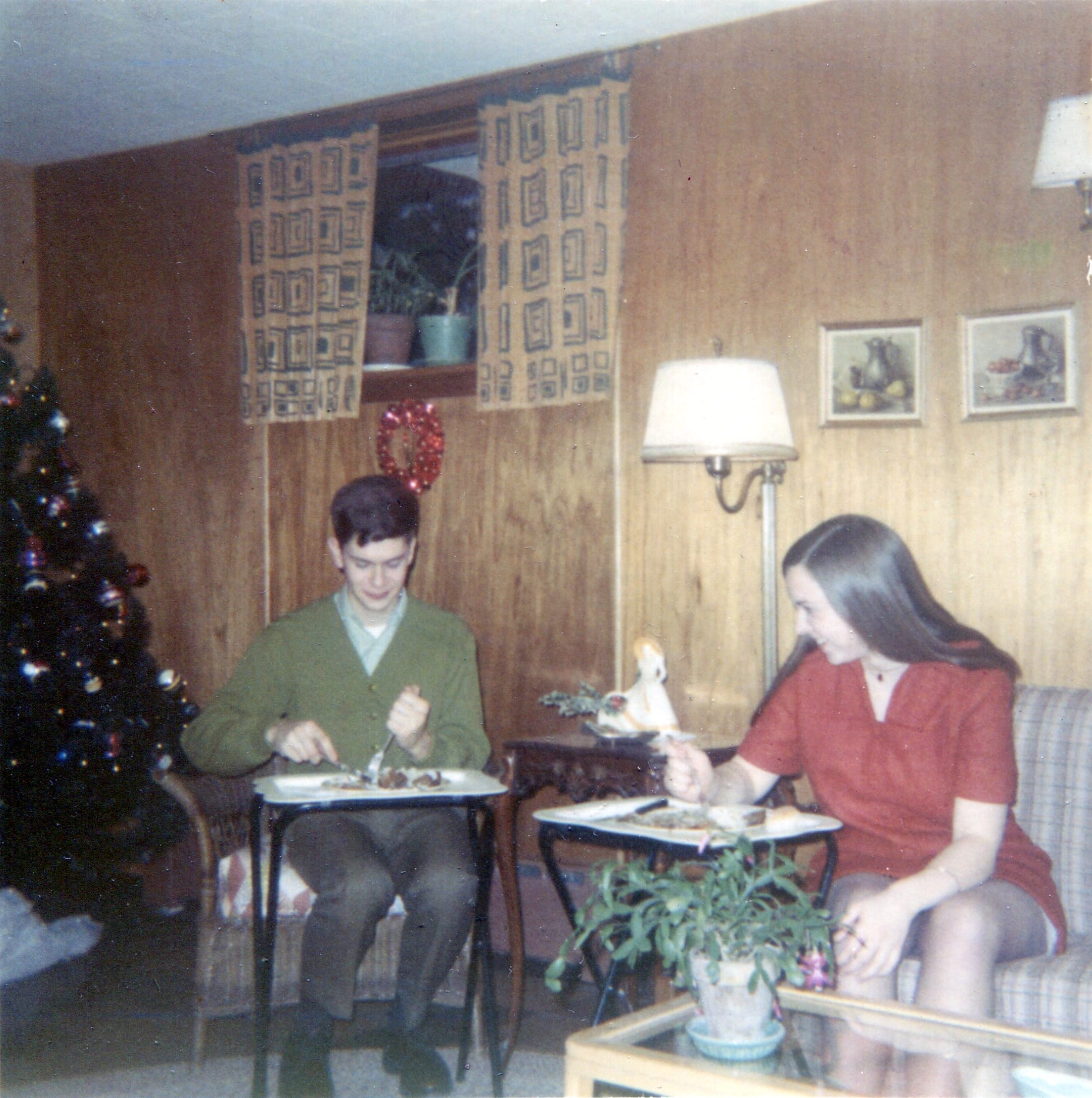
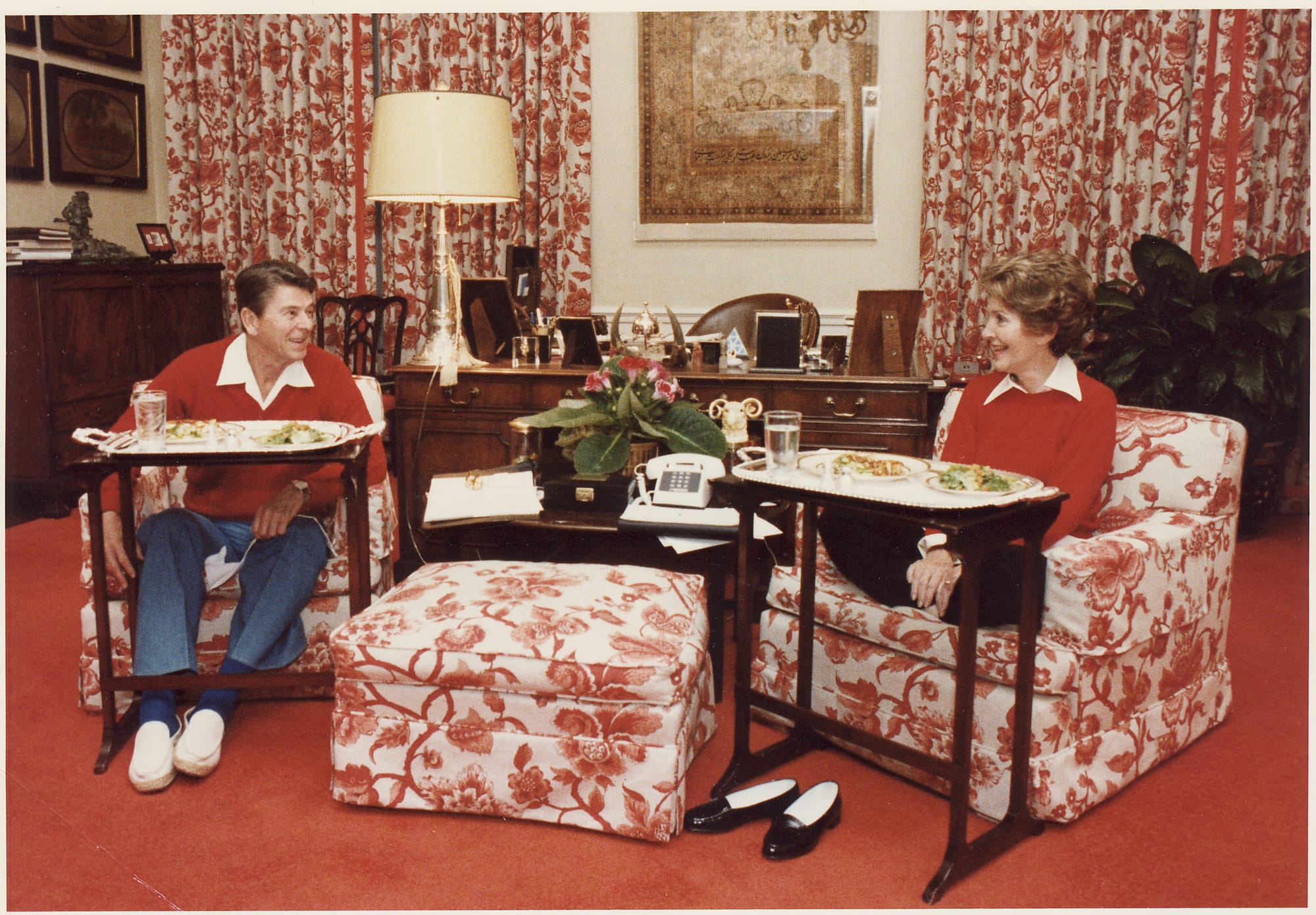
The aluminum tray is long gone, replaced first by microwave-safe packaging when ovens changed in the 1970s and 1980s, then by the single-serve trays and grain bowls and premium entrées of the modern frozen-food market. But the form is still there: a complete meal, separated into compartments, designed to be eaten in front of a screen. The routine Swanson named after the television in 1954 is the same routine most people perform with a different product on any given Tuesday night. In 1981 it even reached the White House.
The turkey problem turned out to have a very long answer.
Like this kind of kitchen-history rabbit hole? Get the free Shelf Life Letter every Friday - one forgotten ad, one kitchen-history story, and one object from the past. Subscribe free at shelflife.me
This article contains an affiliate link. If you purchase through it, the archive earns a small commission at no cost to you.
Image credits: Swanson TV Dinner box and tray, Science History Institute, CC BY 4.0, via Wikimedia Commons. Swanson advertisement, 1950sUnlimited, CC BY 2.0, via Wikimedia Commons. TV tray dining, circa 1970, Gary Hoover, CC BY-SA 4.0, via Wikimedia Commons. Reagan White House photo, Ronald Reagan Presidential Library, public domain.